Planning permission is the part that decides whether
your project happens at all.
Before any architect draws a line, before any builder gives a price, your project must survive the planning system. In conservation areas like Hampstead, Belsize Park and Highgate, getting this wrong doesn’t just delay you — it can kill the project entirely. Refusals go on record. Neighbours who object once will object again. And poorly drafted applications waste months of your time.
We work with RIBA-chartered architects and experienced planning consultants who know the local authority officers, understand Camden’s planning policies, and have navigated the conservation area and listed building consent processes hundreds of times. One team. One point of contact. No gaps between design and submission.
Most of our planning work is in Camden, Barnet, Haringey and the City of Westminster — boroughs with some of the strictest conservation area policies in London. We know what gets approved, what gets refused, and how to frame an application to give it the best possible chance.
Six planning specialisms
Every application starts with a feasibility assessment and ends with a decision notice — or an appeal strategy if needed.
Full Planning Applications
Complete planning submissions for extensions, loft conversions, new builds, change of use, and any project that falls outside permitted development. Design & access statements, site plans, elevations and all supporting documents prepared and submitted.
Permitted Development Checks
Not every project needs planning permission. We assess whether your proposal falls within permitted development rights — and if it does, we obtain a Lawful Development Certificate to give you formal confirmation before work starts.
Conservation Area Applications
Properties in conservation areas face additional scrutiny — external materials, roof forms, window styles and building lines all matter. We prepare applications that demonstrate sensitivity to the area’s character, with heritage impact assessments where required.
Listed Building Consent
Any alteration to a listed building — internal or external — requires Listed Building Consent in addition to planning permission. We prepare detailed schedules of works, heritage statements and justification documents, working with conservation officers from pre-application through to consent.
Pre-Application Advice
Before committing to a full application, we can arrange formal pre-application advice with the local authority. This gives you an officer’s written opinion on your proposal — invaluable for understanding what’s likely to be approved and what needs to be redesigned.
Planning Appeals
If your application is refused, we assess whether an appeal has a realistic prospect of success. If it does, we prepare the appeal statement, collate evidence, identify precedent decisions, and manage the process through to the Planning Inspectorate’s decision.
How a planning application actually works
Most homeowners find planning confusing. Here’s what happens at each stage — and what we handle for you.
Feasibility Assessment
We visit the property, check the planning history, identify whether it’s in a conservation area or listed, review local plan policies, and assess what’s realistically achievable. You get an honest answer — not an optimistic guess — about what’s likely to be approved.
Design Development
Our architects develop the scheme to comply with planning policy while maximising what you get. Plans, elevations, sections and 3D visualisations are produced. For conservation areas, we prepare heritage impact assessments and material schedules. For listed buildings, detailed schedules of proposed works.
Pre-Application (If Appropriate)
For complex or sensitive projects, we submit a pre-application enquiry to the local authority. This gets you written officer feedback before the formal application — letting us refine the design to address any concerns. Significantly reduces the risk of refusal.
Full Application Submission
We compile and submit the complete application package via the Planning Portal: application forms, site plans, proposed drawings, design & access statement, heritage statement (if applicable), and any specialist reports. The fee is paid and validation confirmed.
Determination & Decision Notice
Most householder applications are decided within 8 weeks. We monitor progress, respond to any officer queries or objections, negotiate amendments if needed, and keep you informed throughout. Once approved, you receive a decision notice with any conditions — and we explain exactly what those conditions mean for your build.
“They handled our conservation area application in Belsize Park from start to finish. Pre-app advice, neighbour liaison, heritage statement — all managed seamlessly. Approved first time with no conditions. Couldn’t have gone smoother.”Jonathan & Sarah WilliamsHomeowners, Belsize Park NW3
Applications we’ve designed and delivered
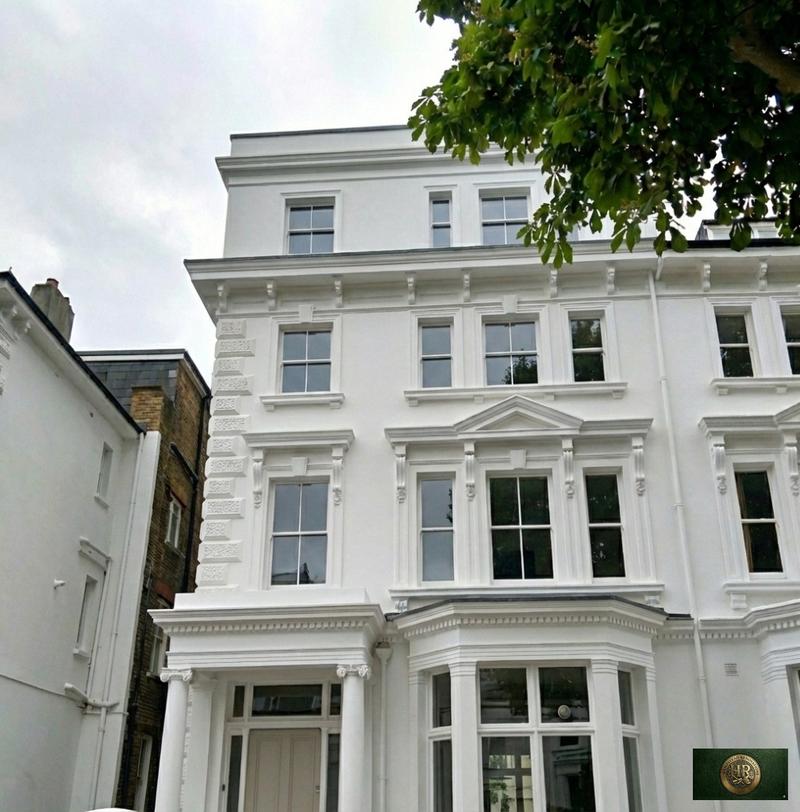
Belsize Park Gardens, NW3
Full planning application for a ground-floor rear extension and internal reconfiguration within the Belsize Park Conservation Area. Heritage impact assessment demonstrated the proposal preserved the building’s character. Approved under delegated authority within 7 weeks.
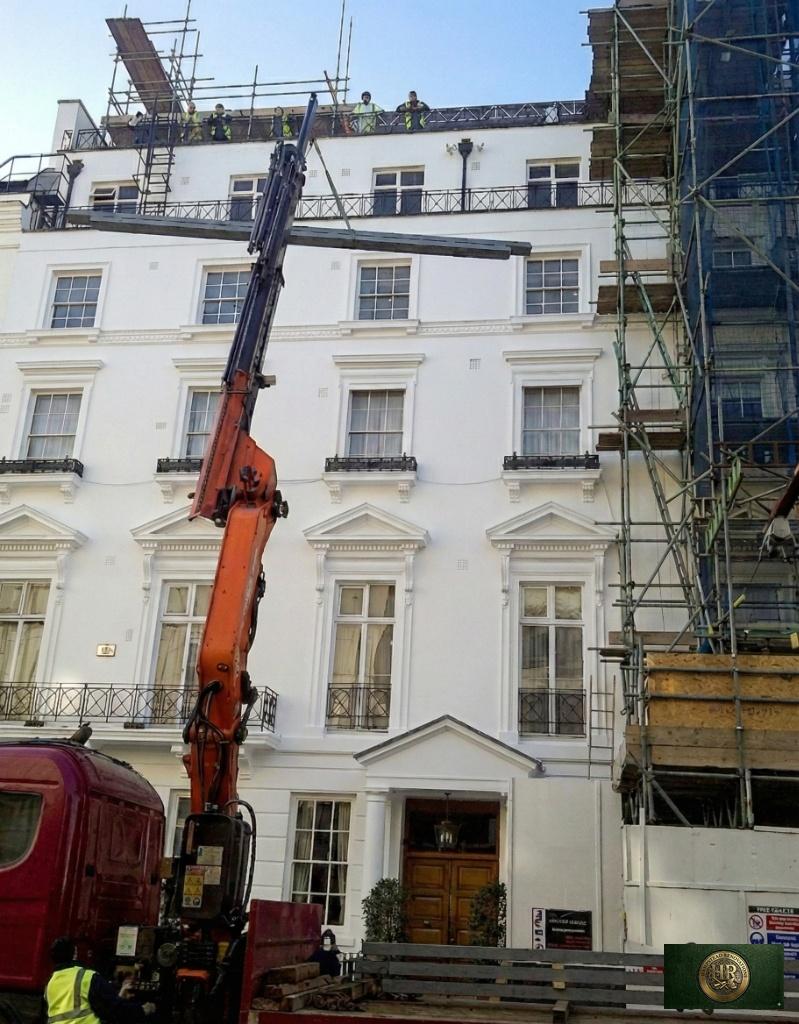
6–10 Carlton Lodge, Belgravia SW1X
Listed Building Consent and planning permission for internal alterations across four apartments and a penthouse duplex. Detailed schedule of works, heritage statement and structural justification prepared. Extensive pre-application dialogue with Westminster’s conservation team secured consent for the full scope of works.
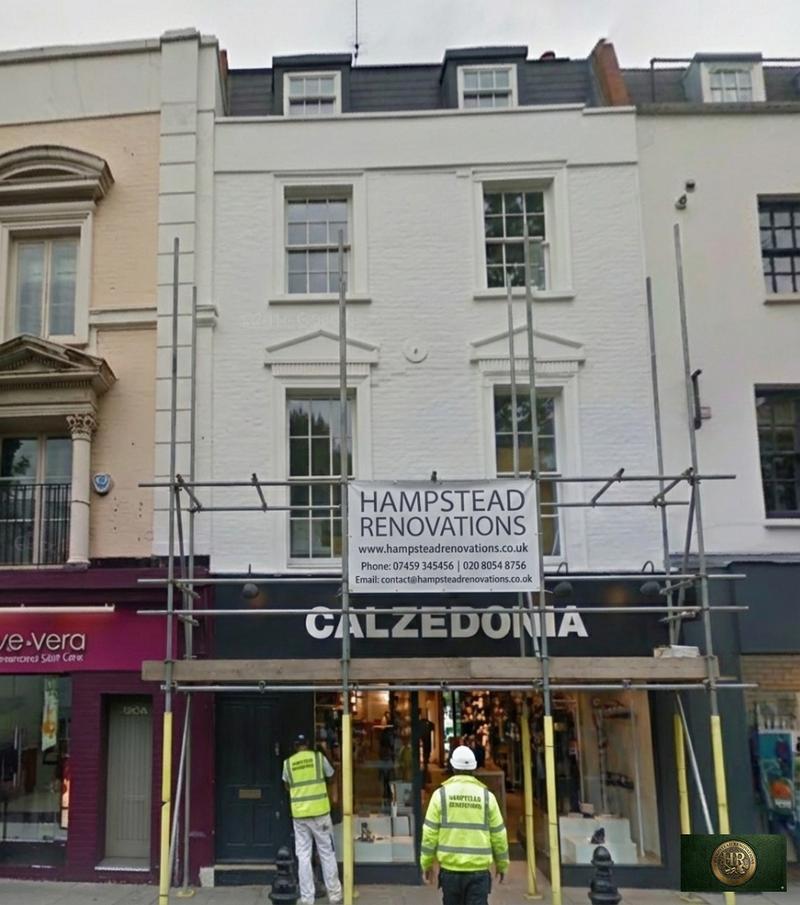
128 King’s Road, Chelsea SW3
Planning application for change of use from offices to retail (ground floor) plus three residential flats above, with a new mansard roof extension. Required careful negotiation with RBKC planners on massing, materials and shopfront design within the conservation area. Approved with standard conditions.
What does planning cost?
These are realistic ranges for London. Fees vary depending on complexity, whether pre-application advice is needed, and whether the property is listed or in a conservation area.
| Planning Service | Typical Range |
|---|---|
| Feasibility assessment & planning appraisal | £500 – £1,200 |
| Lawful Development Certificate (permitted development) | £800 – £1,500 |
| Householder planning application (extension/loft) | £2,500 – £5,000 |
| Conservation area application (with heritage statement) | £3,500 – £6,500 |
| Listed Building Consent application | £4,000 – £8,000 |
| Pre-application advice (council fee + preparation) | £1,000 – £2,500 |
| Planning appeal (written representations) | £3,000 – £6,000 |
| Council planning application fee (householder) | £258 (fixed) |
Our fees cover architect’s drawings, supporting documents and application management. Council fees are paid separately. VAT applies.
Things worth knowing before you apply
Conservation Areas in NW London
Most of Hampstead, Belsize Park, Highgate and large parts of Camden fall within conservation areas. This means external alterations — including extensions, roof changes, window replacements and even painting — typically require planning permission. Article 4 Directions may remove additional permitted development rights.
Permitted Development Rights
Many single-storey rear extensions, loft conversions and outbuildings can be built under permitted development without a planning application. However, the rules are complex and have specific size limits, height restrictions and material requirements. A Lawful Development Certificate gives you formal confirmation.
Neighbour Consultation
The council will notify your neighbours when you submit a planning application. We advise proactive neighbour engagement before submission — showing neighbours the plans and addressing concerns early dramatically reduces objections and avoids delays.
Conditions & Discharge
Most planning approvals come with conditions — typically requiring material samples, landscaping details or construction management plans. These must be formally discharged before the relevant stage of work. We manage condition discharge applications as part of the build programme.
“We’d been told by two other firms that our basement project wouldn’t get planning in a conservation area. Hampstead Renovations took a different approach — pre-app advice, a proper heritage statement, and a well-designed scheme. Approved first time. Outstanding.”Dr Amara OkaforHomeowner, Highgate N6
Planning permission FAQ
It depends on the size and your property’s status. Single-storey rear extensions up to 3m (semi-detached) or 4m (detached) can often be built under permitted development. But if you’re in a conservation area, have a listed building, or an Article 4 Direction applies, you’ll likely need a full application. We check all of this during the feasibility assessment.
Householder applications have a statutory target of 8 weeks. In practice, Camden typically decides within 8–10 weeks. More complex applications (listed buildings, major schemes) have a 13-week target. Pre-application advice adds 4–6 weeks upfront but can save months by avoiding refusals.
You have 12 weeks (for householder applications) to appeal to the Planning Inspectorate. Alternatively, you can amend the scheme and resubmit — there’s no fee for a resubmission within 12 months of a refusal. We’ll advise which route gives you the better chance of success based on the reasons for refusal.
A pre-application enquiry gives you written feedback from a planning officer before you submit formally. It costs between £200 and £600 (council fee) depending on the borough and scheme size. We strongly recommend it for conservation area and listed building projects — it significantly reduces refusal risk.
Neighbour objections are considered by the planning officer but don’t automatically lead to refusal. The decision is based on planning policy, not personal preferences. However, multiple objections can escalate an application to a planning committee, which adds time and uncertainty. That’s why we recommend discussing plans with neighbours early.
Generally no — internal alterations don’t require planning permission. The exception is listed buildings, where Listed Building Consent is needed for any alteration that affects the building’s character — including internal walls, fireplaces, staircases and even some decorative features. Building Regulations approval is still required for structural work.
Book a planning feasibility review
Tell us what you’re planning — extension, loft, basement, or something more ambitious — and we’ll assess the planning constraints, check the history, and give you an honest view of what’s achievable. No obligation.
Unit 3, Palace Court, 250 Finchley Road, Hampstead, London NW3 6DN
Mon–Fri 9am–8pm · Saturday 9am–6pm · Sunday by appointment
Company Reg: 16838595 · £10M Insurance (Aviva) · FMB Member · TrustMark